

Connected Healthcare Systems
Connected Insulin Pump Management System
Hawa Doumbe Traore
Abstract
This project focuses on designing an intelligent connected system to support insulin pump management, glucose monitoring, and communication between patients and healthcare professionals. It proposes an architecture integrating a simulated device, a Flutter mobile application, and a Microsoft Azure-based backend and cloud infrastructure. The objective is to centralize healthcare data, facilitate remote monitoring, and explore automation possibilities in connected healthcare technologies.
- Flutter
- Microsoft Azure
- WebSocket
- Python
- unittest
- UML
- REST API
- Cloud Computing

1. Problem
Diabetes management requires regular monitoring of glucose levels, treatments, and effective communication between patients and healthcare professionals. However, fragmented medical information and the lack of centralized monitoring can make remote patient follow-up more challenging. This project explores the design of a connected system to centralize relevant information and facilitate monitoring.
2. Data
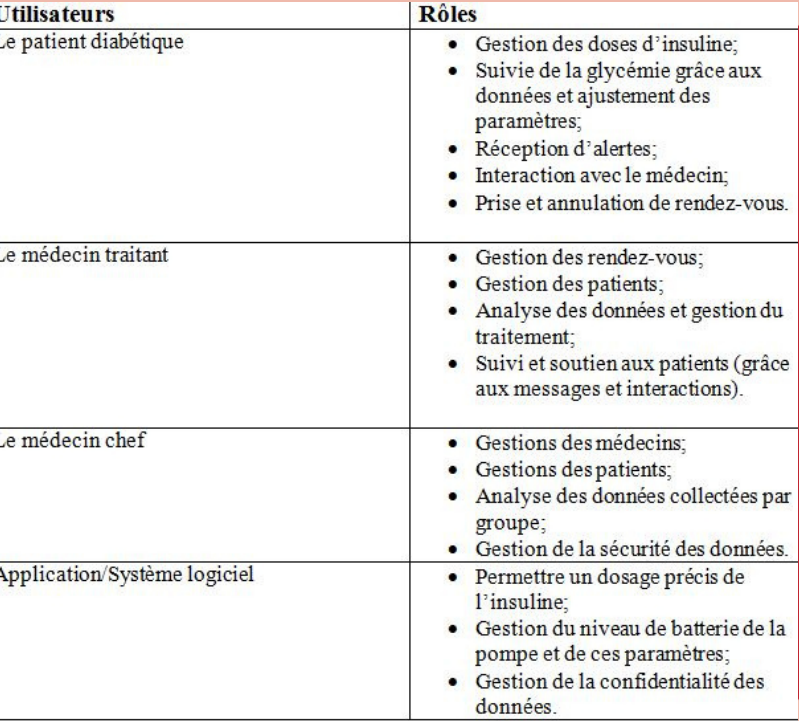
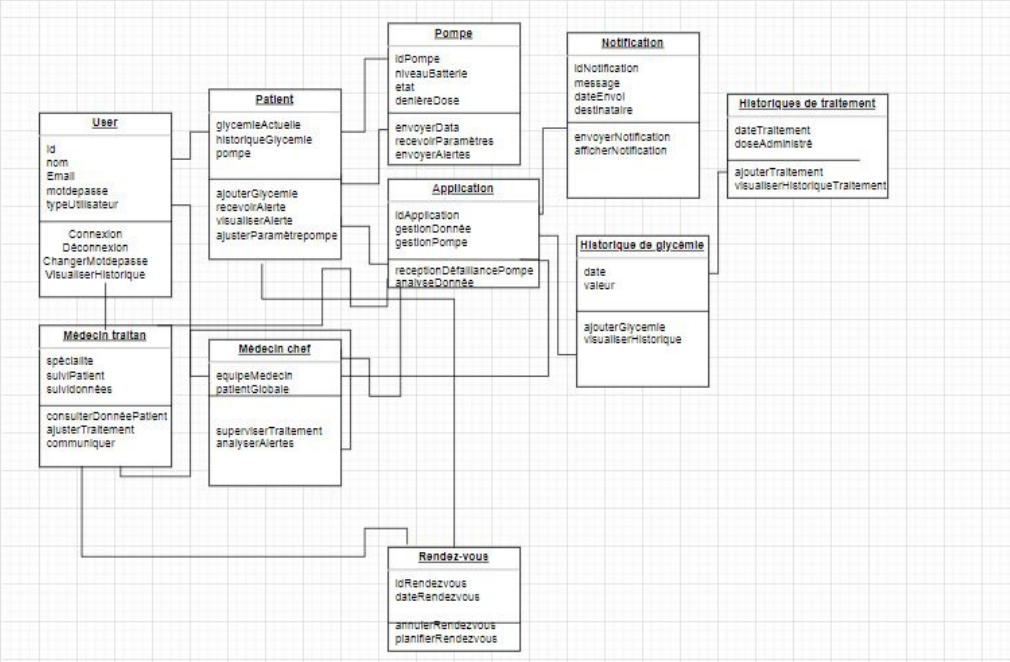
The system is designed to manage several categories of information, including glucose measurements, treatment history, insulin pump data, medical appointments, and notifications. This information is associated with patient and healthcare professional profiles. The project relies on a conceptual data architecture and does not use a real clinical dataset or medical measurements collected from patients.
3. Method
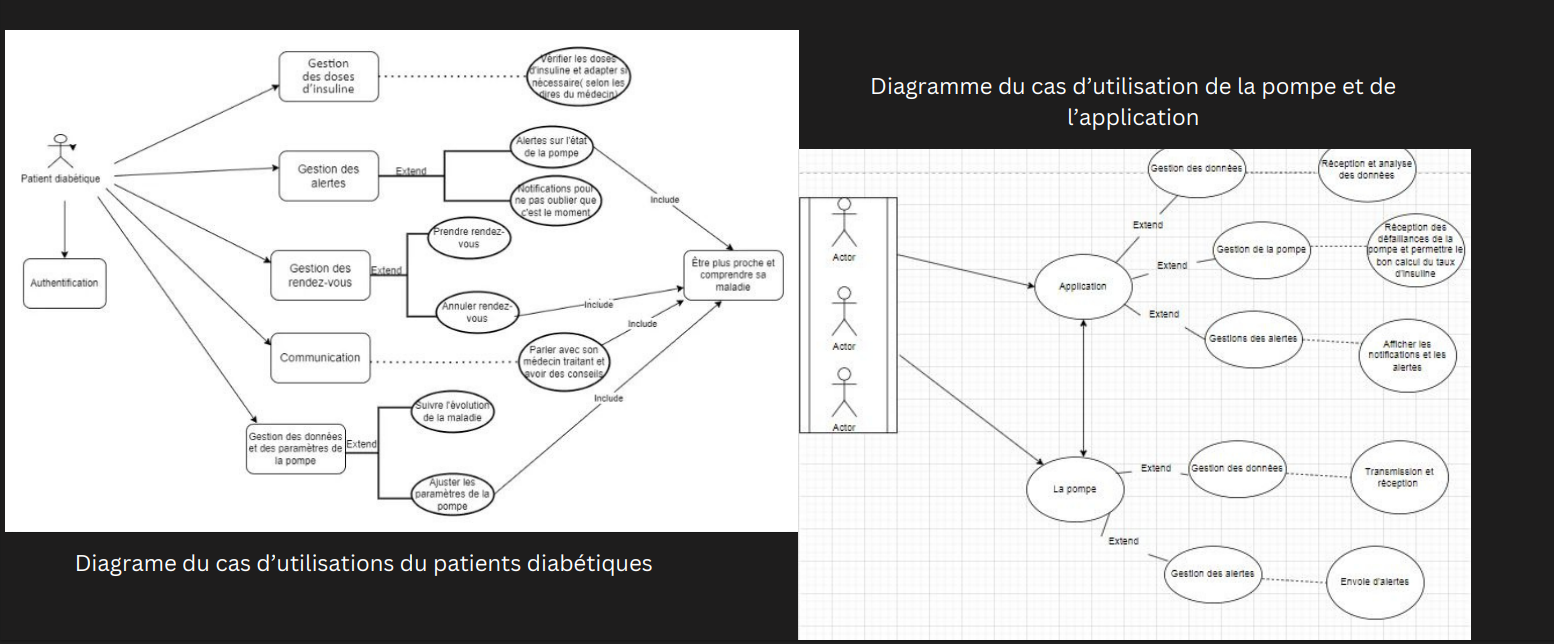
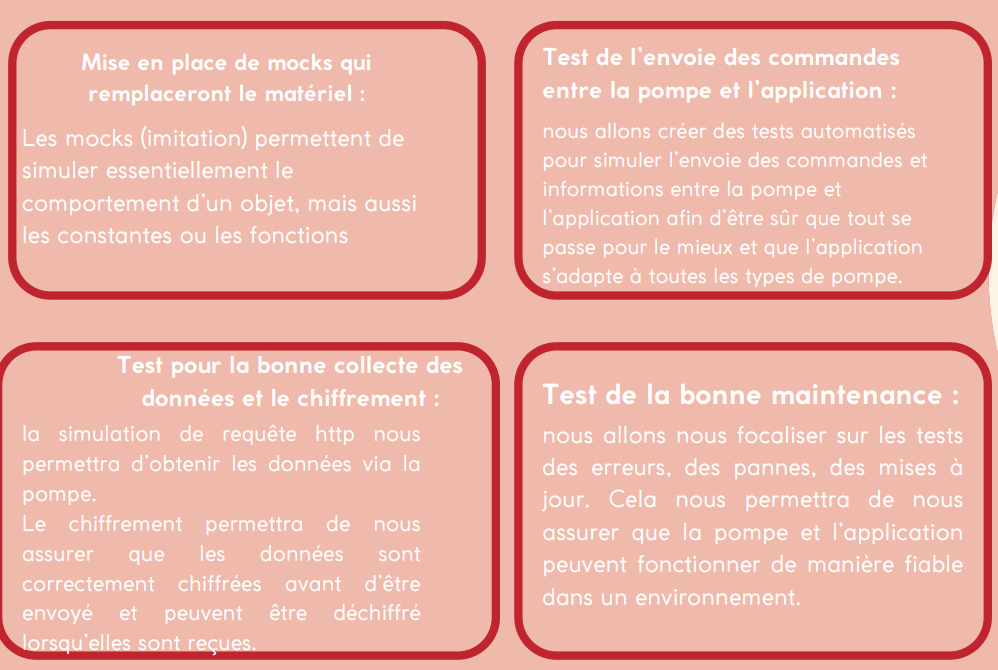
The methodology is based on requirements analysis, functional specification, and the design of a modular architecture. The system is modeled using UML diagrams, including use case and class diagrams. The proposed architecture integrates a simulated device, a Flutter mobile application, and a backend cloud environment planned with Microsoft Azure, using WebSocket-based bidirectional communication. Unit, integration, and security testing scenarios are also defined to examine the expected system behavior.
4. Results
The project resulted in a functional specification and architectural design for a connected insulin pump management system. The main actors, system features, entities, and their interactions were identified and structured through UML modeling. The proposed architecture also defines communication between the simulated device, backend, and mobile application. This work provides a foundation for future development and technical validation.



5. Limitations and future work
The project remains primarily at the academic design and prototype stage. The insulin pump is simulated, and the proposed backend and cloud architecture still requires full technical implementation and validation. Future work could include developing the Flutter application, implementing a secure API, integrating a database, enabling real-time communication, and expanding automated testing. Another potential direction is exploring artificial intelligence techniques for glucose data analysis in an experimental context, without replacing medical expertise.
6. References
Online References
- XMind — Gantt Chart
- Lucidchart — UML Use Case Diagram
- Zuci Systems — The Importance of Regular Application Maintenance
- Geekflare — Unit Testing with Python unittest
https://hawadtraore.alwaysdata.net/en/projects/connected-insulin-pump-management